Longer periods of study are not always associated with better results.
Many students study their textbooks for extended periods of time yet don’t remember much of what they read. Rather than focusing on working harder, the key to effective studying is knowing how to study better.
Well-defined study objectives can lead to more knowledge, better time management, fewer stress, and a higher grade point average.
Set a particular goal for yourself before beginning to learn.
Study smart, not hard. Learn efficient techniques to make every study session count and master your subjects. Here are some practical ways that will help make your learning easier:
Study by Sections
The human brain is excellent at processing information in brief bursts of time. Instead of long and tedious hours of study, break your study time into pieces of 20 to 40 minutes and take a little rest in between.
The Pomodoro Method, for example, is designed to keep your focus from flagging, so your brain doesn’t get mentally overloaded.
Efficiency Retention Inspiration
Understanding over the long term
Instead of simply saying, “I will study mathematics today,” consider something more specific, such as, “I will understand three algebra concepts and complete ten practice questions.”
Your study sessions will be more productive and fruitful if you have clear objectives.
Improve your time management abilities by following a well-planned study schedule. Divide your studies into weekly portions and focus on the most difficult ones first.
Do not establish plans you will be unable to keep. Sometimes studying for a short time with full attention is more helpful than trying to prepare for a test all day.
Take small breaks to recharge your thinking. Use active recall.
Taking examinations on a regular basis is one of the most effective techniques to learn faster. Put down your book and see if you can think of anything to explain what you’ve read.
Consider the following questions.
Please inform me that I can discuss this issue in my own terms.
What kinds of examples can I give?
Can you tell me which areas I still don’t understand?
When you take a test, you teach your brain to do more than just comprehend the material; it also teaches it to access it.
Instead of merely reading, practise becomes perfect.
While reading your notes repeatedly may appear to be making progress, the only way to truly comprehend how to apply what you’ve learned is to practise.
Prepare for your math, science, accounting, and language examinations by answering practice questions and reviewing your mistakes.
Discover why you received a negative response. Reflecting on and learning from previous errors can help you avoid making them again.
Instead of paraphrasing the entire lecture or textbook, good notes should concentrate on the key points.
Contextual learning;
Contextual Learning means associating new material with real-life circumstances, or tying it to what you already know.
This gives significance to learning and makes it easy to remember.
Bringing a science idea together with something you know
Relating a historical event to current-day situations
Connecting arithmetic with real world issues
The brain associates the information with significance and the information preserved is much better.
Have Goals and Work to Achieve Those Goals
Goals provide your routine clarity purpose and motivation. Don’t have imprecise goals like “study maths. Rather, set your goals
Headers, bullet points, photos, examples, and short explanations should be used. If you want to simplify a complex issue, use your own words.
Taking your own notes is one technique to ensure that you understand the content completely.
Distractions like your phone, social media, TV, or unwanted messages might cause you to lose attention quickly.
When studying, set your phone to aeroplane mode or another concentrate mode.
Even brief periods of uninterrupted study can yield impressive results.
It is not a good idea to review all of your materials the nite before an exam. Maintain a consistent review of relevant themes.
If you want to recall things and avoid anxiety about tests, try completing small reviews throughout the week.
Making better use of your study time is a key component of studying smarter.
Minimise distractions, practice frequently, assess your progress, set manageable goals, and build a realistic schedule.
If you want to do well in school, you do not have to study all the time. Instead than keeping count of hours worked, focus on quality.
Studying more effectively, gaining confidence, and simplifying your academic path are all feasible with consistent habits and the correct strategies.
Exams are approaching, and the pressure is building. Whether kids are preparing for standardised examinations, final projects, or in-class evaluations, the end of the school year can be daunting.
However, exams do not need to be stressful. With a solid strategy, the correct tactics, and an emphasis on progress rather than perfection, kids can gain confidence and finish the year strong.
Continue reading to learn practical, tested study techniques for exams that will help students of all ages maximise their efforts and avoid stress as exams approach.
From creating a productive workplace to effectively reviewing, we will cover everything students (and parents) need to know.
1. Start Early: Why Last-Minute Cramming Isn’t Effective
One of the most common mistakes students make is taking too long to start preparing. While cramming may seem helpful, studies demonstrate that it is ineffective for long-term memory and promotes anxiety.
What to Do Instead:
Divide the content into tiny bits and tackle it progressively.
A study calendar can help you stay organised and prevent last-minute stress.
Study strategies for exams: Help your child schedule concentrated study periods in the weeks coming up to the test. Even brief daily sessions are more successful than extended weekend cram sessions.
2. Set realistic and specific study goals.
Vague goals such as “study science” are ineffective. Instead, motivate pupils to develop precise, quantifiable goals, such as:
“Review Chapter 4 vocabulary.”
“Complete 10 practice math problems on fractions.”
“Rewrite and summarise history notes.”
Setting these goals helps students stay focused and motivated as they tick items off their list.
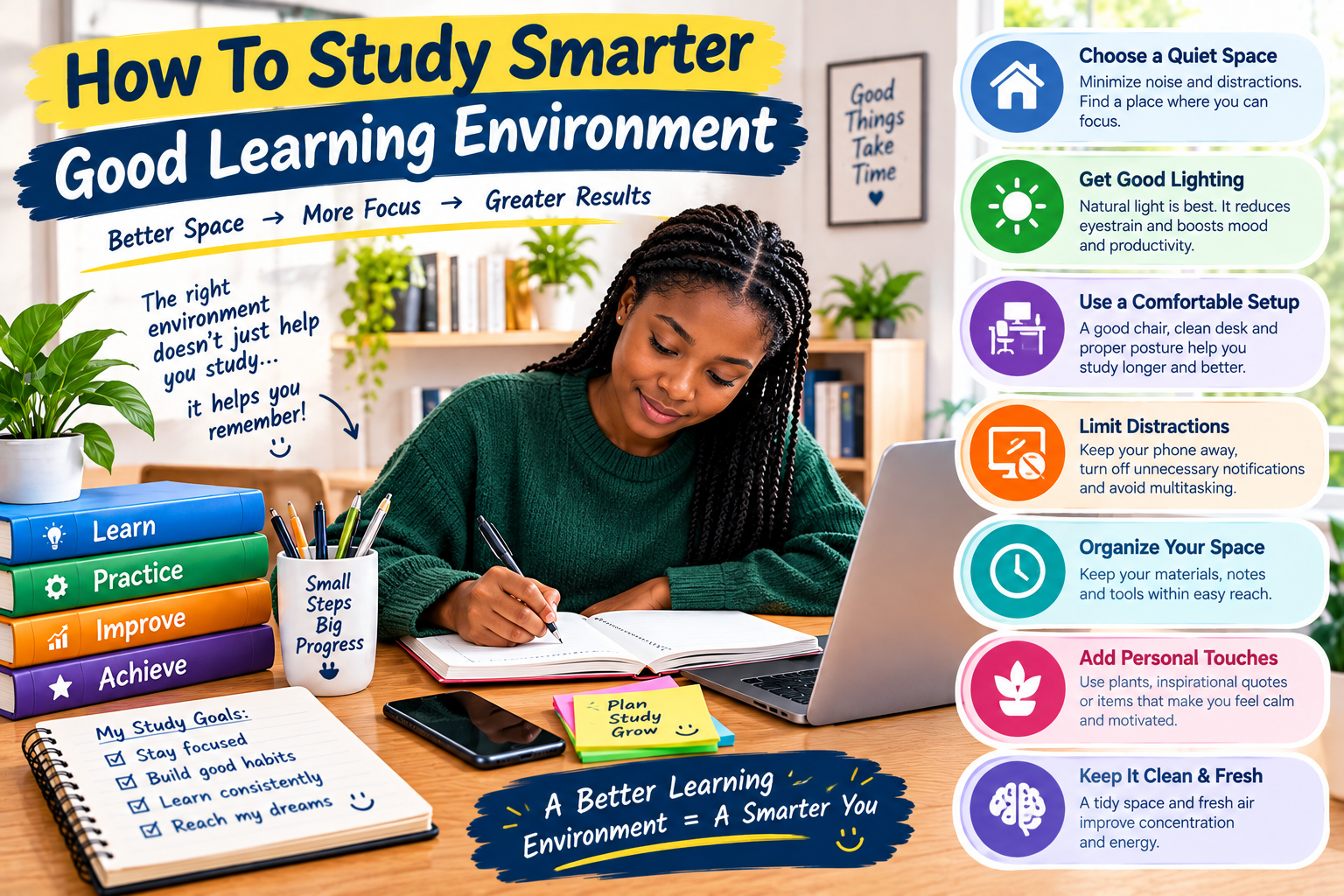
3. Establish a distraction-free study environment.
Students want a constant, well-organised environment in which to concentrate. Clutter, noise, and technology distractions may ruin even the most devoted students.