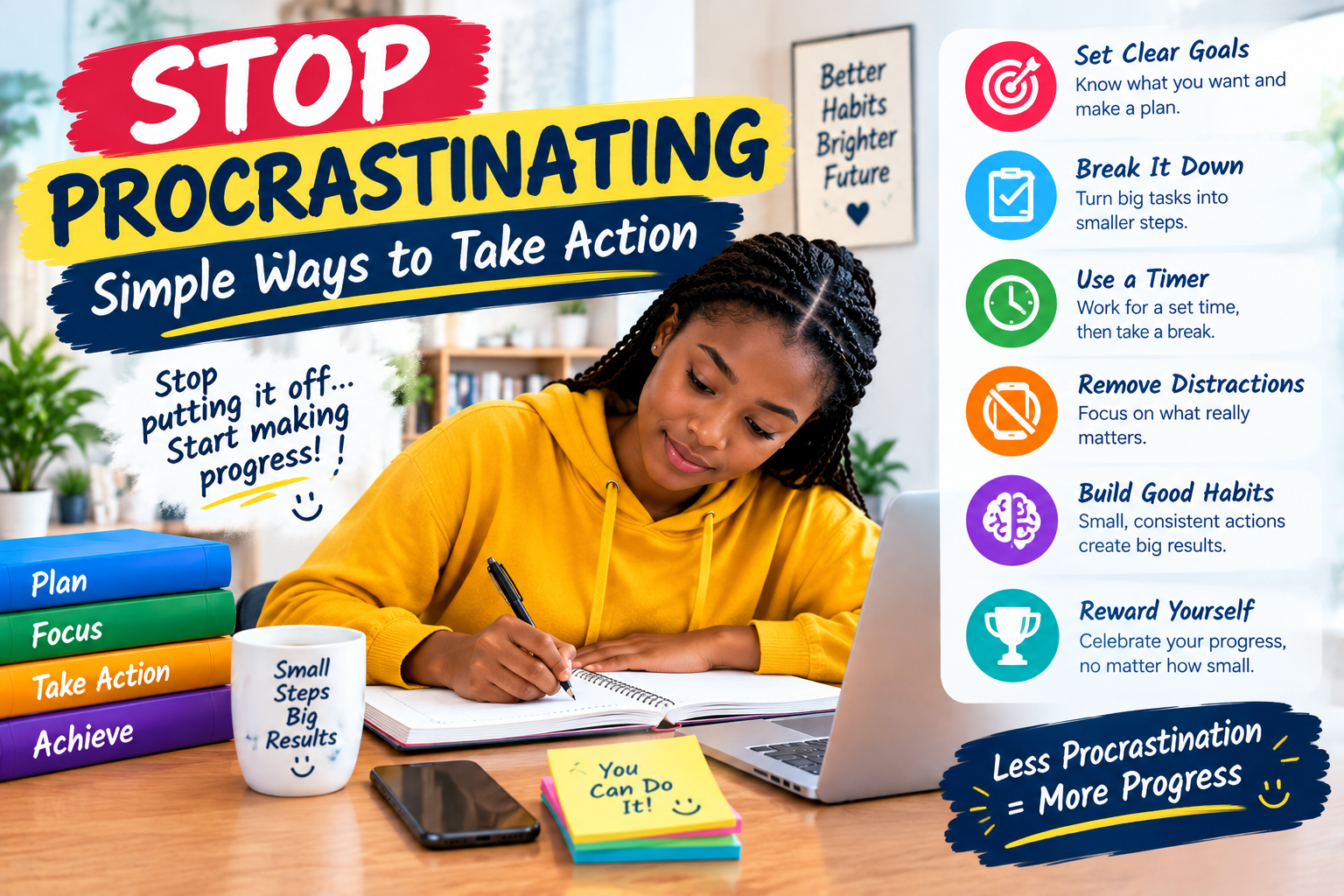
Procrastination is a problem for many people. Maybe you’ve got an important assignment, project, professional activity, or personal goal, but instead of getting started, you keep telling yourself, “I’ll do it later.”
The trouble is that “later” can quickly turn into tomorrow, or next week, or even next month.
Procrastination can keep you from accomplishing your goals and also add extra stress. The good news is that you can get over it by forming better habits and learning how to take action.
What is procrastination?
“Procrastination” is the tendency of delaying something you know you should do, even when you know that delaying it may bring issues.
For example, you may chose to watch videos instead of studying, check social networks instead of finishing an assignment or spend time organising unimportant things instead of focusing on an important project.
We all procrastinate at times but always putting critical things off can hurt your productivity, your confidence and your success.
Know Why You Procrastinate
Understanding why you procrastinate is helpful in stopping it.
Some common explanations are:
The job is too demanding.
You don’t know how to start.
The task feels dull.
You are terrified of blunders.
You want it everything to be flawless.
Easily lost.*There is no deadline for you.
You are working on getting motivated
Once you understand the reason, you can choose a better strategy to handle it.
Begin With a Small Step
One of the easiest methods to combat procrastination is to make the assignment smaller.
Don’t say to yourself, “I have to get all this done.” Say to yourself, “Take the first step.
You might spend 10 minutes studying the subject, writing a paragraph, reading a page or organising your notes.
It’s tougher to start than to continue. Once you begin you may find it a lot easier.
End Waiting for Motivation
Many people think they need motivation before they can start working. But motivation doesn’t always come when you need it.
Sometimes, you have to act first.
Start working even if you do not feel thrilled about the assignment. After making some success, your motivation may naturally improve.
Discipline and constancy can be more dependable than waiting for the appropriate mood.
Set Clear Goals
A imprecise aim can make it simpler to delay.
Instead of saying, “I need to study,” set a specific aim such as:
A defined aim shows you exactly what has to be done.
Set reasonable and quantifiable goals. This way you can readily track your progress.
Create To-Do List
Writing down the duties can help to plan your day.
At the start of the day, jot down the most critical items you need to get done. Then prioritise them in order of importance.
For instance:
1. Finish school assignment.
2. Respond to critical e-mails.
3. Work for an hour.
4. Clean up your work area.
5. Practice.
Concentrate on finishing the key things, not on doing everything all at once.
GET RID OF DISTRACTIONS
One of the main causes of procrastination is distractions.
Social media, television, gaming, unwanted notifications and checking your phone constantly can suck away precious time.
When it’s time to focus, put the phone away or turn off needless notifications. Turn off websites and apps that aren’t linked to work.
A calm location can be a great help to stay focused Set a Timer
A timer can help make a difficult job feel easier.
Try working for 25 minutes with no interruptions, then take a mini break. After your break, begin another focused session.
You can change the timing according to your needs. The idea is to get a period where you’re totally focused on one task.
Don’t Aim for Perfection
Perfectionism may lead to procrastination.
Perhaps you keep putting off a project because you worry your work won’t be good enough.
You consider how hard it is instead.
Remember, your initial try doesn’t have to be perfect.
Start. Fail. Learn. Get better at your work. It’s typically better to finish something and improve it later than to never start it.
Set Deadlines for Yourself Deadlines might motivate you to act.
If you don’t have a deadline for a task, set one. Write it down and take it seriously.
For example, instead of saying, “I will finish this sometime this week,” pick a day and time.
A firm deadline makes you feel responsible and it is tougher to keep putting off the assignment.
Indulge Yourself
Rewards can make being productive more fun.
Treat yourself to something modest when you finish an important endeavour. You can listen to music or go for a stroll or watch an episode of a show or just take some time to chill out.
The trick is to make the reward something you get **after** you make progress.
Don’t Multitask
It can be hard to focus when you are doing a few tasks at the same time.
Focus on one thing and put your whole heart into it.
Do as much as you can and move on to the next activity. This can assist you to work more efficiently and feel less overwhelmed.
Practice Saying Not Yet
You don’t need to quickly respond to every distraction.
If you’re working and get a notification, tell yourself you can check it later.
You can also establish particular times to check mail, social media and entertainment.
This way you get to control your time instead of distractions controlling you.
Have Patience With Yourself
Procrastination does not stop over nite.
Sometimes you may still be putting off tasks. It is the habit and getting back on track that counts.
Don’t waste hours feeling bad for something you have not done. Use the energy to do one small thing.
Progress begins when you forget how much there is to do and concentrate on what you can do right now.
Procrastination might prevent you from reaching your goals, but it doesn’t have to dictate your life.
Begin small . Establish clear goals . Eliminate distractions . Set deadlines . Concentrate on action instead of waiting for motivation .
What is one little thing I can do right now?
Make the initial move. Then have another.
You don’t have to do it all in one go.
You only need to stop procrastinating and start taking action.