You start pushing traffic today, and then you check AdSense tomorrow to see whether any funds have arrived.
If nothing happens, you might wonder if blogging is really worthwhile.
However, Darren Rowse’s tale demonstrates that success in the blogging sector is not so simple.
Before writing an article, consider your intended audience. What are their questions? What difficulties are they attempting to solve? What information are they looking for?
Then, in September 2003, he began testing with Google AdSense.
guess what?
The start was not outstanding at all.
His initial ten months of AdSense growth were extremely modest.
There were no immediate successes.
There was no magical traffic.
There was no sudden money anywhere.
He just kept going.
He continued to publish.
Its purpose was to bring attention to social and political concerns that affect women and young people in Nigeria.
I was loving the reaction from my little fan base of 50 readers, largely in Lagos and Abuja, and having fun.
No, they were not strangers. there was friends and families that wished to support me. God bless their sweet hearts.
I was making stuff on a free blogger account.
Limited customisation features and not being able to get the tools I needed to work.
That was my first blogging error.
Do you remember when you chose to start blogging? You wanted to share your ideas and goals with the world. You wanted to be an industry authority, and assist people solve problems.
A few weeks later you found out that blogging is not as easy as it sounds. No one is visiting your blog. Or clicking on your CTA. What’s wrong?
Because they are imaginative and creative individuals, writers may be tempted to use clever, poetic,
Sadly, this is the exact opposite inclination. For a number of reasons, post headers must be extremely precise and literal.
Vague headlines can affect your content’s search engine ranking because Google and other search engines don’t grasp smart or metaphorical headlines.
People might only see the title if you or others share the item on social media. Will the headline alone be sufficient to entice readers to click?
When reading and finding content online, people usually scan lists and articles quickly.
One of the blogging blunders I’ve seen is people thinking Google traffic is adequate.
If you are a novice, the direct recommendation from Google search result pages will not come for a long.
The greatest thing you can do is get the word out on social media, especially through Ads, and create backlinks from respected blogs.
Backlinks are one site’s vote of confidence in another. You need a good blend of dofollow and nofollow links. Backlinks boost your domain rating and SERP visibility. Learn how to connect with influencers in your industry. See more in this guide on building backlinks.
Guest post on their site to leverage their relationships and get a backlink. Use freemium tools like Hunter to locate and connect with influencers.
Unless your title is attention-grabbing or your name has meaning, they are unlikely to slow down and focus on your content.
Good bloggers know who they’re writing for.
Understanding your audience allows you to generate content that is more valuable and relevant.
Instead of merely writing about your passions, strike a balance between them and what your readers want to read.
Some bloggers set up their posts to share automatically on the social media accounts where they’re active.
But this is a huge mistake and missed opportunity to share your content along with a personal message, question, or other means of engaging people on each social media network.
If you value your blog content, then value how you present it and introduce it to people. Don’t just dump the link and walk away, and expect people to care about it.
A blog’s success is not guarantyd just by publishing a large number of articles.
Some bloggers try to write multiple posts per day while paying little attention to quality. This can lead to poorly researched, repetitious, or unhelpful content.
It is usually preferable to produce a few high-quality articles rather than a lot of pieces with little worth.
Before posting, ask yourself whether this piece will teach, help, entertain, or solve an issue for the reader.
Your title is one of the first things readers notice.
Even if you have written an excellent article, a poor headline may deter readers from clicking on it.
A strong headline tells readers what to expect from the story.
Large blocks of text in a blog post can be tough to read, especially on a phone.
Use headings, subheadings, brief paragraphs, bullet points, and numbered lists to make your information easier to read.
Good formatting enables readers to rapidly locate the content they are looking for.
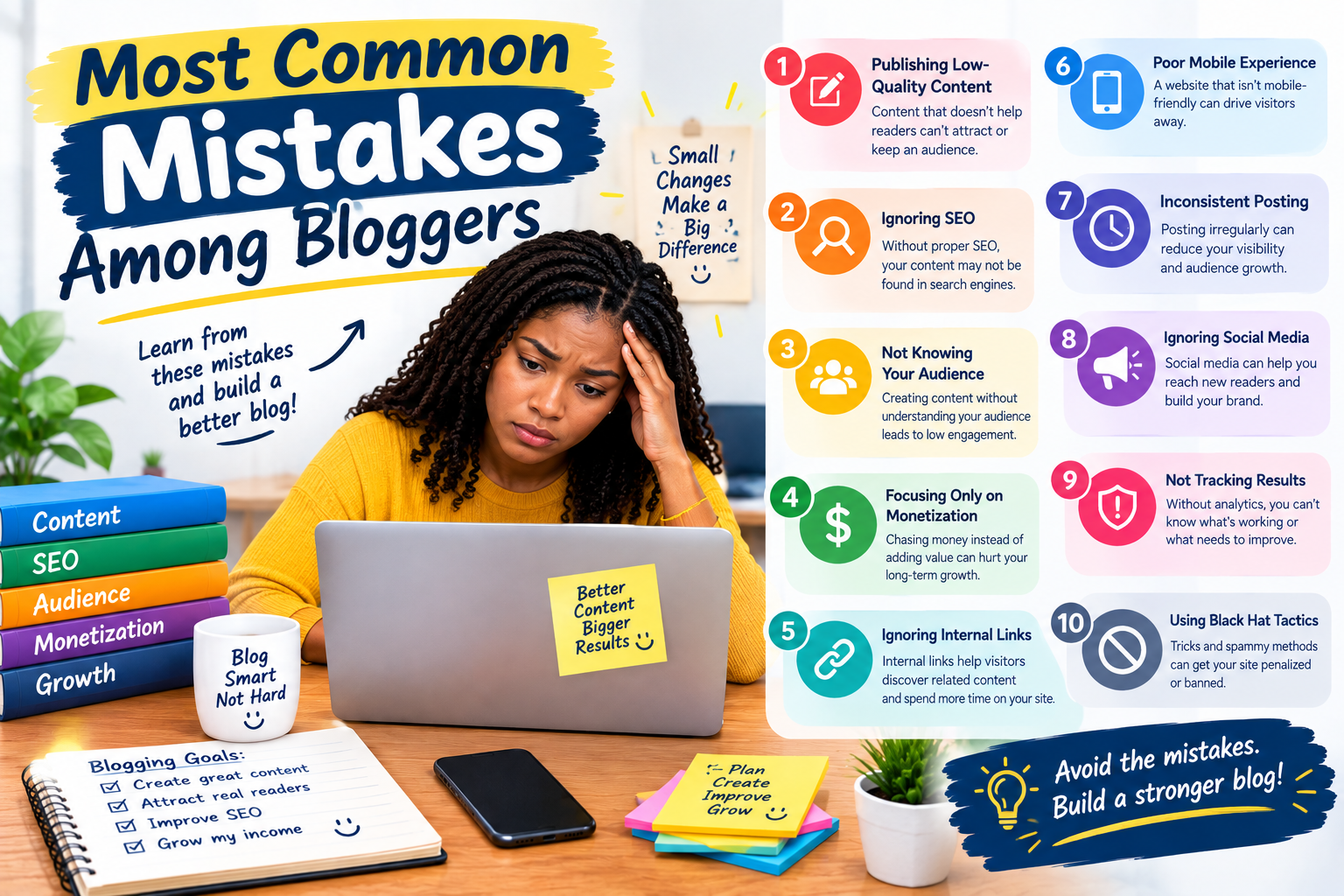
Successful blogging is more than just writing and publishing articles. It entails knowing your target audience, providing valuable material, maintaining quality, promoting your work, and being open to learn.
One blogging mistake I notice is people thinking that Google traffic is enough.
But if you are a rookie, the direct advice from Google search result pages will not arrive for long.
The best thing to do is to get the word out on social media, especially through Ads, and gain backlinks from reputable blogs.
Backlinks are essentially endorsements from one website to another.
You need a nice balance of dofollow and nofollow links. Backlinks improve your domain ranking and SERP exposure.
Develop your ability to network with industry influencers.
Learn more in this guide on building backlinks.
Leverage their connections and acquire a backlink with a guest article on their website.
Use freemium tools like Hunter to find and connect with influencers.
Remember that readers frequently skim blog postings before deciding whether to read the whole thing.